Ambassador Rajiv Bhatia is Distinguished Fellow, Foreign Studies Programme at Gateway House. He is a member of CII’s International Advisory Council, Trade Policy Council and Africa Committee. He is theChair of FICCI’s Task Force on Blue Economy, and served as Chair of Core Group of Experts on BIMSTEC. He is a founding member of the Kalinga International Foundation and a member of the governing council of Asian Confluence. As Director General of the Indian Council of World Affairs (ICWA) from 2012-15, he played a key role in strengthening India's Track-II research and outreach activities. During a 37-year innings in the Indian Foreign Service (IFS), he served as Ambassador to Myanmar and Mexico and as High Commissioner to Kenya, South Africa and Lesotho. He dealt with a part of South Asia, while posted as Joint Secretary in the Ministry of External Affairs. A prolific columnist, he is also a regular speaker on foreign policy and diplomacy in India and abroad. He was Senior Visiting Research Fellow during 2011-13 at the Institute of South East Asian Studies (ISEAS), Singapore. He holds a master’s degree in political science from Allahabad University.His first book India in Global Affairs: Perspectives from Sapru House(KW Publishers, 2015) presented a sober and insightful view of India’s contemporary foreign policy. His second book, India-Myanmar Relations: Changing contours(Routledge 2016) received critical acclaim. His third book, India-Africa Relations: Changing Horizons (Routledge 2022) has also been receiving positive reviews.
Expertise
Foreign Policy, Quad & Indo-Pacific, South & South-East Asia, Africa, Blue Economy
India is currently hosting the Voice of Global South Summit, in which over 120 countries will participate. This is the time, as G20 chair, for India to articulate the concerns of the Global South. To truly represent the South, India must understand the moods and changes in Africa, especially in its external partnerships
2023 brings responsibility and opportunity for India. As the host of the G20 and the Shanghai Cooperation Organization, the world will be watching closely. With this authority, comes challenges encapsulated by five C’s: Covid, Contraction, Climate crisis, Conflict and China. If India is able to use its opportunity, the year could end with India viewed as a near-great power, an international bridge-builder, and a successful democracy.
India is geopolitically committed to a ‘free, open, inclusive, peaceful and prosperous’ Indo-Pacific. But unless these five adjectives are viewed and acted on with seriousness, via the country’s North East both developmentally and culturally, the country will be unable to take advantage of its regional proximity to the Indo-Pacific.
India has not invested much in multilateral rule-making institutions like the G20, but it is never too late to start. India is ahead in some aspects, particularly technology with digital public goods and its governance. But it will certainly need help and expertise.
Despite the current tense global atmosphere, India and its foreign policy have remained true to its core of peace and security for all and equity and justice for the developing world. Throughout history, dialogue and diplomacy has been supported as a solution to dispute. Now, as G20 President, New Delhi can sow these seeds of peace in an increasingly multipolar world.
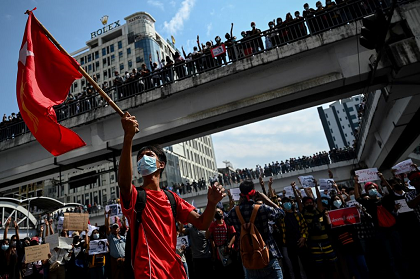
Nearly two years after the military coup in Myanmar, tensions remain, with no domestic or international solution in sight. Despite these setbacks, the Myanmarese people's commitment to democracy has not faltered. As they did a decade ago, the Myanmar elite and leadership of both camps must once again use resilience and pragmatism to craft a way out of the current crisis.
On Dec 1, India will take over the Presidency of the G20, the premier global forum for dialogue and cooperation on global economics and financial issues. This is a unique grouping, where developing and developed countries come together with equal status. Understanding its mission, past trajectory, institutional mechanisms, work methods, and the multiplicity of challenges it addresses, is critical today and requires a serious examination.
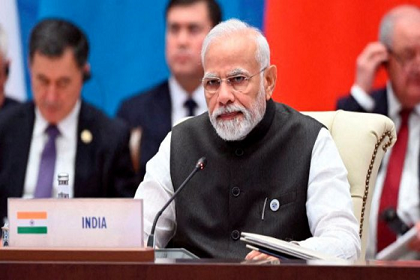
The recent SCO Summit held in Samarkand was significant not only because it was held in-person after three years but also because of its rapid expansion and the increasing attention to economic development. The SCO’s progress on connectivity, commerce and digitalization is relevant for India which takes over the presidency in 2023.
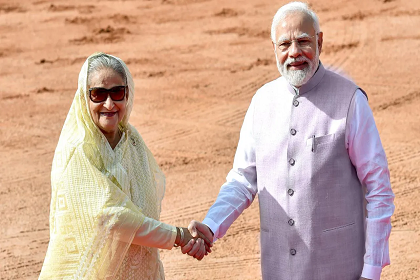
Delhi and Dhaka are fully conscious that they must get this vital equation right, constantly strengthening and deepening their cooperation and countering the challenges they face. In this, the contributions of the Sheikh Hasina government in nurturing the special ‘bonding’ is enormous and widely appreciated.
India will be president of the G20 in 2023. The world’s most influential economic governance body is facing an existential crisis, where the major powers have fallen out. With geopolitical currents redefining geo-economics, India needs to be ready to emerge as the chief global diplomat.