 Courtesy: PMO India
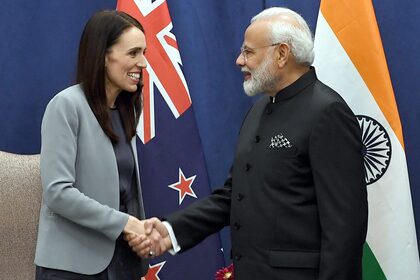
On 23 June 2021, the India-New Zealand Business Council (INZBC) Summit for the year 2021 was held. Ambassador Rajiv Bhatia, Distinguished Fellow, Foreign Policy Studies Programme, participated in the panel discussion and delivered his remarks on ‘Indo-Pacific Strategic Ties’. In his speech, he highlighted India and New Zealand’s voluntary subscription to champion the concept of free, open, inclusive and rules-based Indo-Pacific. He also suggested five policy measures to translate the shared perspective into practical plans and actions for the common good.
 Courtesy: Shutterstock
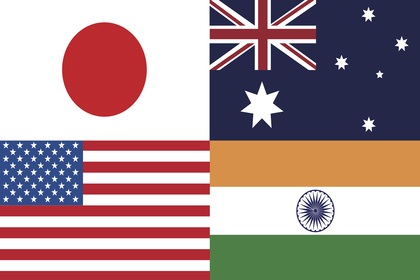
The Quad countries are preparing for an autumn summit in Washington, which will provide an opportunity to discuss multilateral cooperation in various sectors. Four dimensions which merit closer attention and are crucial to the group's future are the Indo-Pacific strategies of European countries and the EU, partnerships with ASEAN and its members, closer India-U.S. ties and maritime security issues in the Pacific.
 Courtesy: Reuters
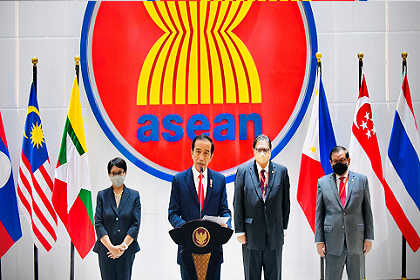
Since the military coup in Myanmar on February 1, violence and protests have broken out across the country and are continuing. Supported by India and Japan, ASEAN has played a key role, by calling the emergency summit in Jakarta. It has bridged internal gaps and helped navigate the international community to a reconciliation of the crisis. India must continue support to such efforts, which aim for immediate and long-term peace.
 Courtesy: Twitter| @usaid_india
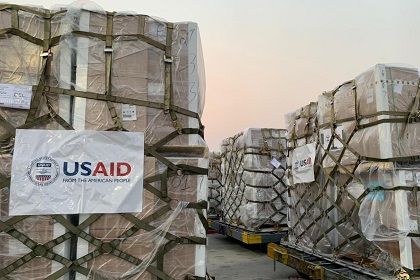
In the past two weeks, the U.S. has been sending planeloads of aid to India. This is a welcome change from its previous hesitation, which turned around in four critical days. It reflects the importance of an effective Indian diaspora and of the Global Comprehensive Strategic Partnership with India.
 Courtesy: @MEAIndia | Twitter
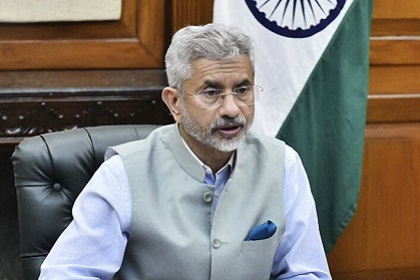
The 17th Bay of Bengal Initiative for Multi-sectoral Technical and Economic Cooperation (BIMSTEC) ministerial meeting was held on 1 April 2021. Though the grouping is ready to move forward, a number of obstacles stand in the way of this, including regional tensions, uncertainties surrounding SAARC and China's involvement in the multilateral. As BIMSTEC is to celebrate the silver jubilee of its formation next year, can it achieve its goal, to effect “a paradigm-shift in raising the level of cooperation and regional integration"?
 Courtesy: Shutterstock
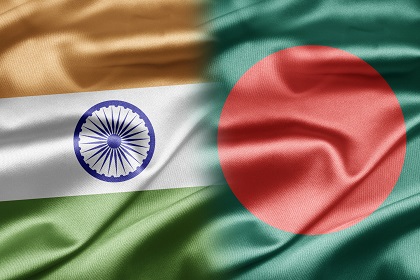
This month marks the beginning of triple celebrations in Bangladesh, including the 50th anniversary of its independence, for which Prime Minister Modi will be traveling to Dhaka as the guest of honour. There is much to celebrate: A country that began as a case study for development is now on top of the global GDP charts. The springboard was achieved through a thriving textiles industry, women's workforce participation, micro finance, liberal investment policies. There is much to learn from this neighbour.
 Courtesy: The Hindu
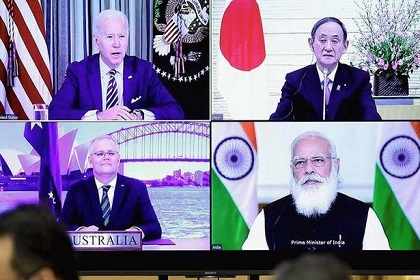
The first-ever Quad Leaders' Summit on March 12, 2021 was a defining moment in Asian geopolitics, with the promise of a strong political commitment in the future. A joint op-ed by the Quad leaders stated a number of priorities for the grouping, ranging from security in the Indo-Pacific to climate change to vaccine partnerships. This is a crucial partnership for India, as this grouping of democracies will reinforce Indian diplomatic initiatives, launching the country into global relevance.
 Courtesy: Shutterstock
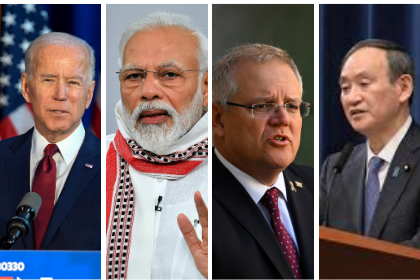
In its recent itineration, the Quad (or the Quadrilateral Security Dialogue) has been toiling since 2017, through deliberations among mid-level and senior officials, to develop a common vision for the challenges facing the Indo-Pacific region, challenges caused by China's menacing rise and aggressive behaviour.
 Courtesy: Gateway House
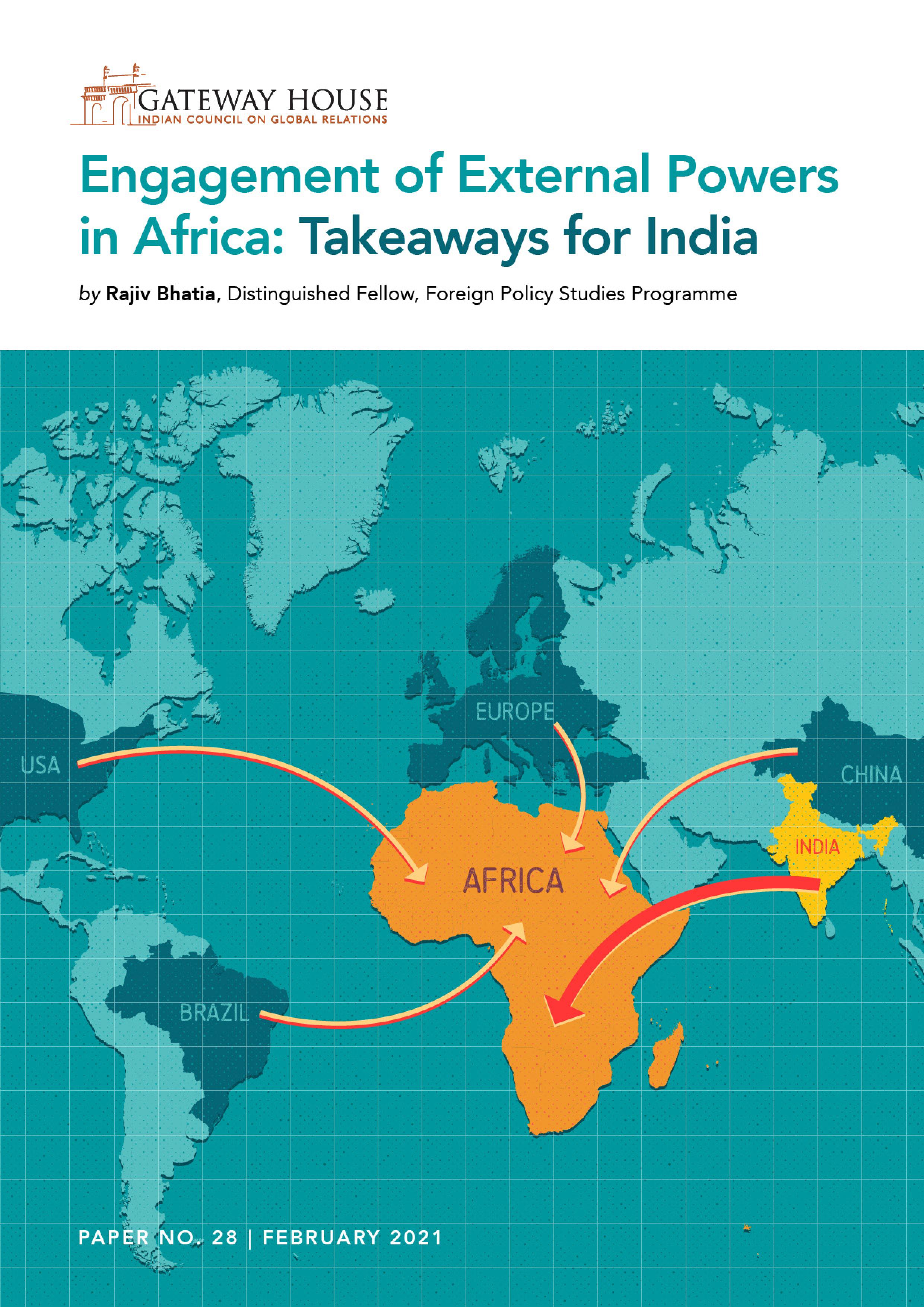
As multiple foreign powers compete in Africa, there is a need to understand the geopolitical landscape, and analyse the various policies, strategies and motivations of each country. Where lies India in this great strategic game? India has a unique relationship with the continent, with respect for equality, mutual benefit, and need-based assistance. By deepening India-Africa cooperation, bolstering economic relations and leveraging new digital, space and medical technologies, the relationship between India and the African nations can be better cemented, despite the global competition at play.
 Courtesy: Reuters
In principle, India supports democracy everywhere, but is also committed to non-interference in the internal affairs of other countries. But instability in Myanmar could trigger support for insurgency in India's North east, which is now on the path to progress. Accelerating the completion of India’s development cooperation projects in Myanmar will send a positive signal for regional stability.