Nayanima Basu is a New Delhi-based journalist and author. She is experienced in international relations, strategic affairs, geopolitics and geoeconomics. She brings newsroom experience of over two decades, having worked at The Business Standard, Bloomberg Tax, The Hindu, The Deccan Chronicle and ThePrint. She has also contributed articles to several independent international publications. As a senior journalist, she is currently writing reports and analyses for publications such as ABP News, StratNews Global and The Hindu Business Line.
Her ground reportage from Afghanistan during the takeover by the Taliban in August 2021 won her praise from several media organisations and geopolitical experts. Her recently published book 'The Fall Of Kabul: Despatches From Chaos' by Bloomsbury India has received several accolades in Indian as well as international press. She has also won the AutHER Award for the book.
Basu has worked with the US-India Business Council under the US Chamber of Commerce for a special project as ‘Director for Public Policy’. She is a 'Visiting Researcher' at GIFU Women’s University, Japan.
Expertise
Foreign Policy, Security & Strategic Affairs, Intelligence, India and its Neighbourhood
The visit of Taliban foreign minister Mawlawi Amir Khan Muttaqi to India has resulted in the reopening of the Indian mission in Kabul, and the resumption of stalled projects, mostly in the development sector. India now needs a long-term strategy for Afghanistan – starting with an outreach to the Taliban’s Supreme Leader, the dreaded Haqqani network, even the anti-Taliban groups – to secure its position in that country.
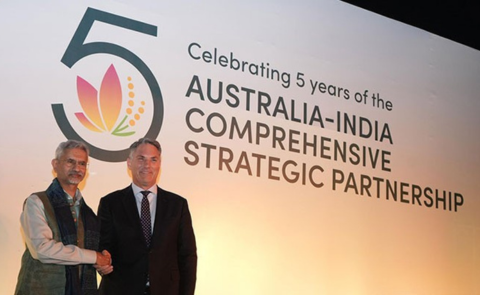
This year marks the fifth anniversary of the India-Australia Comprehensive Strategic Partnership, signed in 2020 to boost defence and security ties and enhance trade and investments. But the foundations had been laid earlier in 2009, when India and Australia elevated their relationship to a Strategic Partnership. The bilateral has evolved significantly, making Australia one of the most stable partners in a rapidly changing global order.
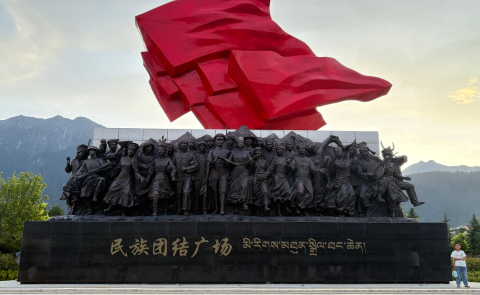
Today’s Lhasa is far from being a forbidden land where oracles are more common than human beings. It is a modern Chinese city, with swish hotels, art galleries and businesses. The transformation – and Sinicisation - of Tibet has accelerated under Chinese President Xi Jinping. The selection of the next Dalai Lama will cement the Chinese hold over that land
Chinese Foreign Minister Wang Yi's two-day visit to India achieved a significant goal: to resolve the bilateral border dispute and ensure Prime Minister Narendra Modi’s presence at the Shanghai Cooperation Organisation summit. It’s not a reaction to the U.S.-India tariff tensions, but a realistic policy compulsion felt by India.
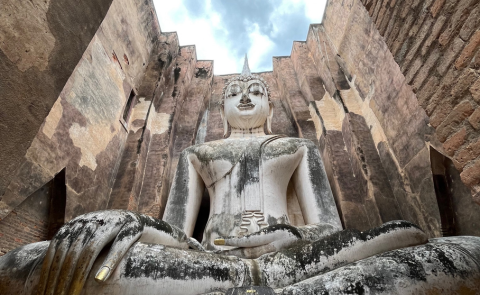
Thailand is often associated with its stunning beaches and vibrant nightlife. However, a visit to the country’s historic past, from the ancient kingdoms of Sukhothai and Ayutthaya to its role in the second World War, reveals how much Thailand has for those interested in history and culture.
India and the U.S. are now on the verge of establishing a comprehensive trade agreement, overcoming a long history of bilateral trade challenges. This is a pivotal moment that could lead to mutual benefits and a deeper partnership. It will also illumine the path for other modern trade agreements that India is currently negotiating with multiple countries.
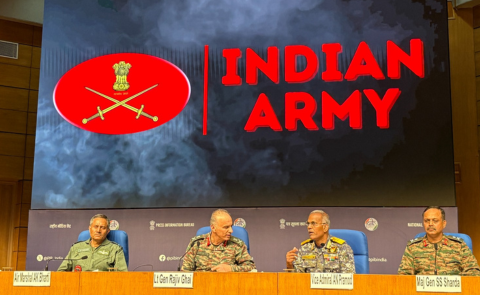
Operation Sindoor has established a “new normal” in India-Pakistan relations. It has also given the world a glimpse into the Narendra Modi government’s future strategy in countering terrorism supported by the Pakistani Army and ISI, and how New Delhi will manage the Kashmir dispute.
The horrific attack on April 22 on tourists in Kashmir has exposed its stark and violent reality. Kashmir remains tumultuous even after the abrogation of Article 370 in 2019. Before confronting Pakistan, India must first address its internal challenges and deliver on its election promises to achieve enduring progress.
U.S. President Donald Trump is determined that India lower tariffs on American imports. He is sending his top representatives to communicate with officials in New Delhi before his own arrival in the Indian capital, aiming to finalize the proposed bilateral trade agreement.