BIMSTEC, bridge between South & South East Asia?
TIMES NOW featured our Distinguished Fellow in Foreign Policy Studies, Amb. Rajiv Bhatia on their show to discuss the fourth BIMSTEC Summit. Watch the full episode here.

 Courtesy:
TIMES NOW featured our Distinguished Fellow in Foreign Policy Studies, Amb. Rajiv Bhatia on their show to discuss the fourth BIMSTEC Summit. Watch the full episode here.
 Courtesy: Mea/ Flickr
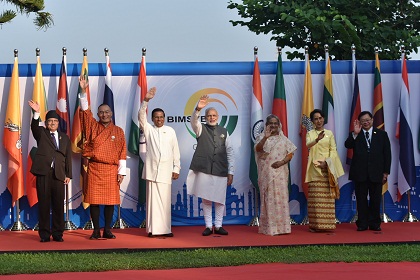
The 21-year-old regional organisation, which will hold its fourth summit on August 30-31, was formed because of the opportunities to make headway in economic and social development through cooperation, but it has achieved modest success. It has a relevance independent of SAARC or ASEAN and goals of its own to pursue
 Courtesy: Gateway House
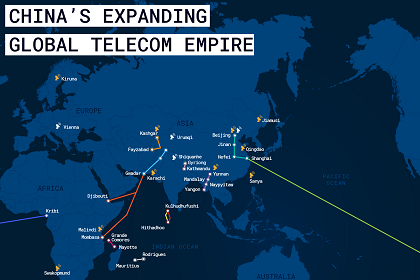
This version of the Gateway House Map on China’s Expanding Global Telecom Empire identifies some more telecommunication assets -- optic-fibre and satellite ground stations -- that Beijing is working on in South and Central America, Africa, Myanmar, the Indian Ocean Region and mainland China besides the existing ones, such as the Pakistan East Africa Cable Express (PEACE). It shows the direction China’s investment is taking, its diplomatic overtures and the larger geopolitical implications of its growing telecom empire
 Courtesy:
Our Distinguished Fellow in Foreign Policy Studies, Amb. Rajiv Bhatia, was a guest on Lok Sabha TV’s ‘Global Review’ hosted by Sachin Chaturvedi, discussing recent elections in Pakistan as well as the BRICS Summit. Watch the full programme here.
 Courtesy:
Gateway House is represented at the Nepal-India Think Tank Summit by our Fellow, National Security Studies and Director, Centre for International Security, Sameer Patil. The summit received wide coverage by the local press including a mention of Gateway House in Read more
 Courtesy:
Our Director, Amb. Deo, joined the India Development Debate yesterday to discuss Imran Khan – PTI‘s election victory, along with Eurasia Group‘s Shailesh Kumar, Pakistani policy journalist and Maroof Raza, retd. Indian Army officer. Watch the full video here.
 Courtesy: Rajya Sabha TV
Religious parties, some of them founded by anti-India terrorist groups, have dramatically risen to the fore in the Pakistan elections held this week. The 2018 polls mark a milestone as the military has enabled their entry into the political mainstream
 Courtesy:
Maldives Independent mentioned our research on Chinese investments and how aid to the Maldives have surged since 2012. Our research says the three largest Chinese projects are together worth $1.5 billion and that there will be repayment problems. Read the full article here.
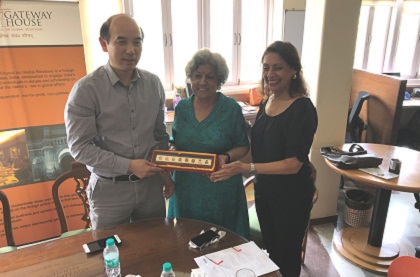
Yuan Peng, Vice President, and Dr. HU Shisheng, director, respectively of the Institute of South & Southeast Asian and Oceanian Studies, China Institute of Contemporary International Relations, Beijing, spoke to Gateway House about working towards ‘the final goal of denuclearisation’, India-China relations since the Doklam stand-off and addressing security concerns raised by the Belt and Road Initiative
 Courtesy: Gateway House
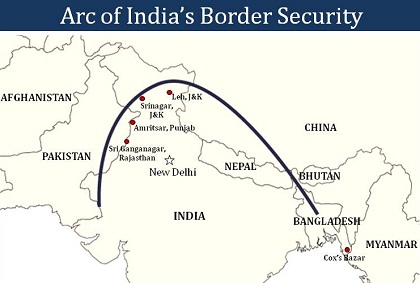
Border regions and communities, some of them far from the heartland, constitute India’s first line of defence, a critical link in its national security. India’s 15,000-km borders touch seven neighbouring countries: Afghanistan (abutting Gilgit), Pakistan, Nepal, Bhutan, China, Bangladesh, Myanmar. Border regions have their own local dynamics, often shaped by subnational and religious identities that do not necessarily align neatly with political borders. Some also serve as flourishing corridors for illegal smuggling of goods and humans. Technology plays an important role in better protecting borders, but in some cases it has made borders obsolete. Despite their importance, border regions do not receive the full attention of the Indian mainstream, except when border tensions arise.