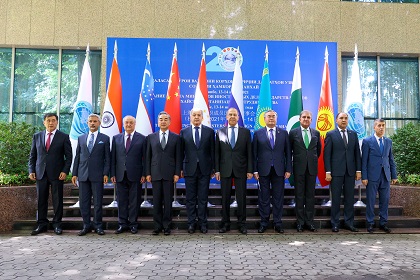
Foreign ministers and officials of the Shanghai Cooperation Organisation (SCO) pose for a group photo during a meeting in Dushanbe, Tajikistan July 14, 2021. Russian Foreign Ministry/Handout via REUTERS Courtesy: Reuters
20 April 2022

The SCO in Afghanistan

The Shanghai Cooperation Organisation has been focused on resolving the Afghan crisis. But divergent views of members and the influence of China and Pakistan have eluded a solution. This has been further impeded by the ongoing sanctions and humanitarian issues which are beyond the organisation's scope.
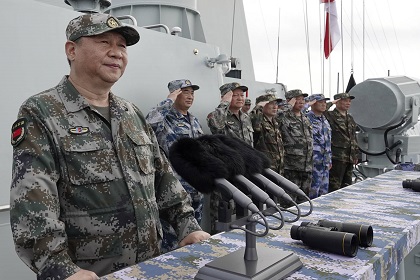
FILE - In this April 12, 2018, file photo released by Xinhua News Agency, Chinese President Xi Jinping, left, speaks after he reviewed the Chinese People's Liberation Army (PLA) Navy fleet in the South China Sea. From Asia to Africa, London to Berlin, Chinese envoys have set off diplomatic firestorms with a combative defense whenever their country is accused of not acting quickly enough to stem the spread of the coronavirus pandemic. (Li Gang/Xinhua via AP, File) Courtesy: The Japan Times
31 March 2022

China’s military modernisation

China's 2022 defence budget reflects the seriousness of the Communist Party aims to fully modernise the People’s Liberation Army by 2027. Given the on-going border competition, it is crucial for India too, to optimise budgetary resources, intensify restructuring and enhance indigenous defence production, thereby improve power projection capability.

huri afghanistan Courtesy: AP News
16 February 2022

Afghanistan in the Sino-U.S. contestation

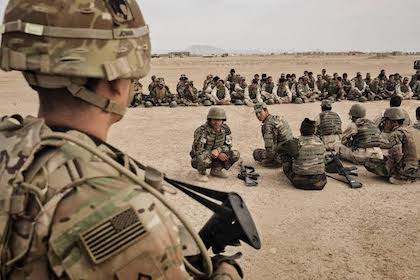
Themes of rivalry between China and the U.S., of China's readiness to fill the void left by the U.S. withdrawal in Afghanistan, dominate accounts of recent developments in that country. What does China's inclusion in the power game in Asia, with a geopolitical vision remarkably different from that of the West, mean for the developments in Afghanistan?

today hong kong horizontal Courtesy: Macmillan
31 January 2022

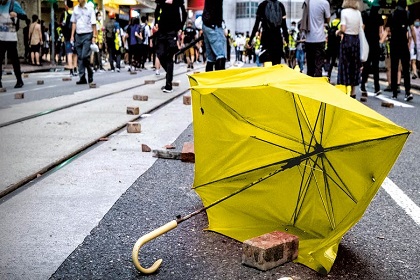
Today Hong Kong, Tomorrow the World

The contemporary fate of Hong Kong, which has known freedom and rule of law, offers in microcosm a glimpse of what could happen if the liberal world order is up-ended. In this book, Mark Clifford convincingly argues that what happens in Hong Kong doesn’t stay in Hong Kong, as he draws connections between the techniques used to end freedom there with China’s penetration and manipulation of open societies elsewhere.

Leveraging China's Economy Courtesy: Twitter |@GatewayHouseIND
28 October 2021

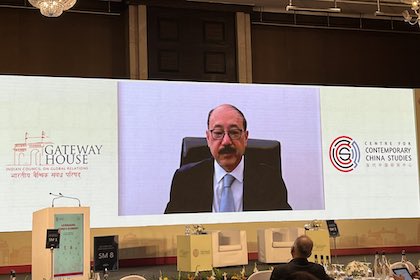
Leveraging China’s Economy

On October 21, the Foreign Secretary Harsh Vardhan Shringla inaugurated the CCCS-Gateway House conference on "Leveraging China's Economy". In his keynote address, he traced the India-China trade imbalance, explained that the disturbed border changed equilibrium and noted that the "ability of India and China to work together will determine the Asian century".

Portuguese string of ports Courtesy: Diu Vanza Darji Samaj UK
28 October 2021

The Portuguese string of ports

Five hundred years before the ‘string of pearls’ or strategic naval bases surfaced as part of China’s global dominance plan, Imperial Portugal was a naval power which tried to impose its hegemony over vast swathes of the Indian Ocean. What informed this grand vision of a 16th-century Portuguese seaborne empire?

Countering China's grand tech strategy Courtesy: Shutterstock
21 October 2021

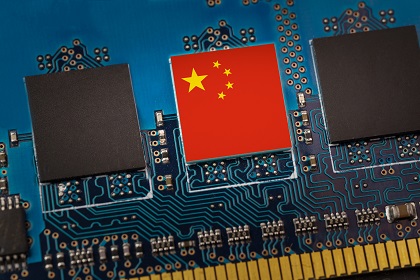
Countering China’s grand tech strategy

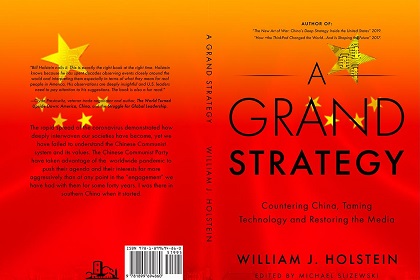
In 'A Grand Strategy: Countering China, Taming Technology, and Restoring the Media', a new book on China's technological ambitions, author William J. Holstein explains China's push to advance its technological prowess, exploring ​the link between technology, politics and economics in today's world. In this podcast, he tells us more about this connection, which has often been overlooked by the American media.

GrandStrategy-Cover (1) Courtesy: Brick Tower Press
14 October 2021

American tech companies in China

Xi Jinping's crackdown on private tech companies in China has shattered hopes of Beijing being a 'responsible stakeholder' in a U.S.-led world order. American CEOs are also silent on how their tech products are used in China, especially artificial intelligence. The Federal Government should engage with these CEOs to moderate the proliferation of sensitive technology and prioritise national security.

20 years after 9/11, has the U.S. learnt from its mistakes? Courtesy: The New York Times
16 September 2021

U.S. 2001-21: Of Friends and Foes

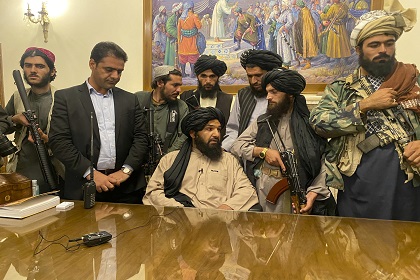
After 9/11, the threats to America are right where they were 20 years ago: still in Afghanistan, and now backed by the strength of a state. What happened to America, that “shining city on a hill” that beckoned brightness to its shores and won allies? Some self-delusion, a belief that it was still the global monarch after World War II and the inability to distinguish between friends and foes.