shutterstock_1574519104 Courtesy: Shutterstock
2 January 2020

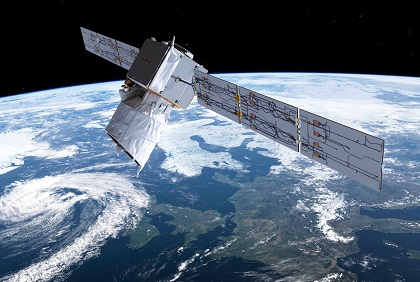
India and the revolution in space affairs

India’s preparedness in the decade of the 2020s for the imminent revolution in space affairs depends on mastering Industry 4.0. This is critical as space aspirations now define national interests – a marked change from the vanity-and-pride programmes of the first space age. This will also determine India’s space leadership for the rest of the 21st century


shutterstock_1420267892 Courtesy: Shutterstock
14 November 2019

6G, the new frontier

India’s status as a key geoeconomic power calls for indigenous R&D of critical information-communication-technology infrastructure at least a generation ahead of time. India must activate the exploratory R&D phase on sixth-generation (6G) network technologies immediately to safeguard its strategic autonomy in the emerging era of informationalised warfare

shutterstock_1023930217 Courtesy: Shutterstock
22 August 2019

The Telegram phenomenon

The tool used to sustain and coordinate protests is a young, encrypted messaging service called Telegram. Its unique privacy and security features and resistance to the state has made Telegram more popular than its larger rivals, WhatsApp and WeChat. What is this communication phenomenon?

shutterstock_765921106 Courtesy: Shutterstock
11 July 2019

Making India a Methane Economy

India is the second largest emitter of methane in the world. But methane-cracking has enormous economic potential. It can help India become a high-technology manufacturing powerhouse by producing a steady supply of methane-derived, advanced carbon materials and hydrogen-energized transportation

shutterstock_1042736410 Courtesy: Shutterstock
11 July 2019

Chandrayaan-2: presaging private participation

On 15 July, the Indian space programme will achieve a feat with the Chandrayaan-2 mission. Two challenges lie ahead: the speedy construction of Chandrayaan-3 and the development of a public-private ecosystem of space capabilities

Mainimage(2) Courtesy: Gateway House
4 July 2019

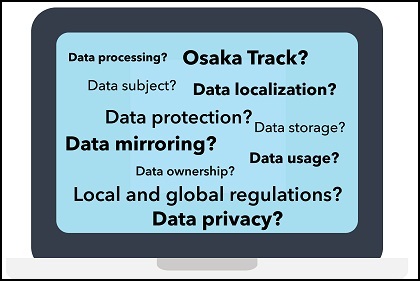
Decoding data localisation

Data localisation, or the practice of physically storing data on servers located within a country, has become a subject of robust debate after India introduced data localisation provisions in its domestic laws. India’s position is not unique; China and Russia too have similar laws. It has pitted countries against each other. This Gateway House primer explains the complexities of data localisation and its elements

MzExMjcwMA Courtesy: IEEE Spectrum
6 June 2019

BECA and the 5G-weather clash

The Basic Exchange and Cooperation Agreement for Geospatial Cooperation (BECA), the last of the India-U.S. foundational agreements, will enable India to avail of U.S. expertise on geospatial intelligence and to sharpen the accuracy of weapons and automated hardware systems used for military purposes. But the over-emphasis on imaging in the agreement overlooks the likelihood of a clash between the telecom and meteorological technologies, which can hurt India’s crucial capabilities in space-based weather forecasting and disaster management

Bilateral Courtesy: Gateway House
24 May 2019

A case for balanced BITs

The Bilateral Investment Treaty has been losing favour as a dispute resolution mechanism since the recession of 2008. India has terminated several BITs after receiving an unfavourable award in a 2012 case. These terminations have created uncertainty regarding existing foreign investments and are not the answer to disputes. A balance is needed, especially for emerging markets, which must protect against claims whilst ensuring confidence in business. The analysis below provides some options