Seeking dignity and direct democracy
The leaderless protests are upending traditional definitions of leadership and forms of hierarchy. Instead, the protestors are seeking some form of direct democracy and dignity.

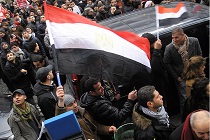 Courtesy: Jacques Delarue/Wikimedia Commons
The leaderless protests are upending traditional definitions of leadership and forms of hierarchy. Instead, the protestors are seeking some form of direct democracy and dignity.
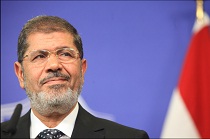 Courtesy: European External Action Service/ Flickr
The downfall of Egyptian president Mohammad Morsi was partly contributed by those thousands of protesters who disagreed with his view of “Us” and “Them”. Leaders such as Morsi have focused on persecuting those who refuse to share their vision; continuing down this path would have had a negative impact on history
 Courtesy: Semilla Luz/ Flickr
The protests in Brazil, Turkey, Egypt and India are bound by a common thread of grievances against misuse of government power and corruption. These modern protests show a marked decline in government trust, even though may not always have clear objectives
 Courtesy: MEAphotogallery/ Flickr
In 2012, Iraq emerged as India’s second largest crude oil supplier thereby shifting focus back on bilateral relations. However, India’s historical and cultural connection with Iraq, as well as common geopolitical concerns, reveal that relations have the potential to go beyond oil
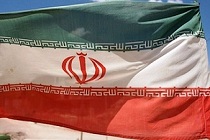 Courtesy: openDemocracy/Flickr
Hassan Rohani’s victory in the June 14 presidential election has demonstrated a growing urge among Iranians for democracy, freedom and integration with the outside world. Will Rohani be able to create an environment where pragmatic policies and national interests take precedence over revolutionary zeal?
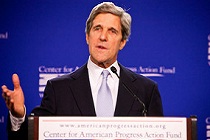 Courtesy: Center for American Progress Action Fund/Flickr
The U.S. Secretary of State’s visit to India comes at a time when India is witnessing significant realignments in its domestic politics while the U.S. is busy tackling its cyber-spying allegations. Amidst these preoccupations, will the upcoming India-U.S. talks churn out substantive outcomes?
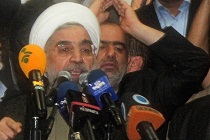 Courtesy: Ansarymehr/Wikimedia Commons
Hassan Rohani’s victory in the June 14 presidential election in Iran might allow more moderate voices in the political dialogue. But Iran's establishment decides positions on all major issues, including the nuclear programme, Syria, and dealings with the West. To what extent can Rohani change course?
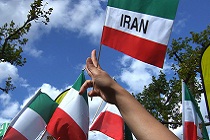 Courtesy: Creative Commons/Flickr
The 11th presidential election of Iran is unlikely to be fully democratic or transparent, but the winner will decide the nature of Tehran’s engagement with the West over its nuclear programme. The outcome of this election will also have a bearing on the crises in Syria and Iraq, and the Palestinian-Israeli conflict.
 Courtesy: Foreign Affairs
A decade ago, the U.S. immersed itself in the greater Middle East with its wars on Afghanistan and Iraq. Will the current economic scenario force it to turn away from this region?
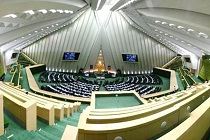 Courtesy: Parliament of Iran (Majlis)
As the 11th Presidential election of Iran draws closer, the atmosphere in Tehran has been abuzz with hope as well as deep cynicism. Why is Iran at a crossroads again? Why will the outcome of this election indicate the foundation of the next chapter in this civilization’s history?