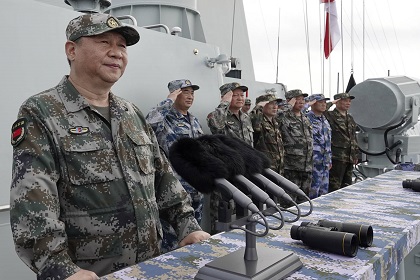
FILE - In this April 12, 2018, file photo released by Xinhua News Agency, Chinese President Xi Jinping, left, speaks after he reviewed the Chinese People's Liberation Army (PLA) Navy fleet in the South China Sea. From Asia to Africa, London to Berlin, Chinese envoys have set off diplomatic firestorms with a combative defense whenever their country is accused of not acting quickly enough to stem the spread of the coronavirus pandemic. (Li Gang/Xinhua via AP, File) Courtesy: The Japan Times
31 March 2022

China’s military modernisation

China's 2022 defence budget reflects the seriousness of the Communist Party aims to fully modernise the People’s Liberation Army by 2027. Given the on-going border competition, it is crucial for India too, to optimise budgetary resources, intensify restructuring and enhance indigenous defence production, thereby improve power projection capability.

Logistics,And,Transportation,Of,Container,Cargo,Ship,And,Cargo,Plane Courtesy: Shutterstock
10 March 2022

India in the Resilient Supply Chain Initiative

Concerns of global supply chains being overdependent on China has shifted the focus to India. This became clear in 2021 when Australia, Japan and India together launched the Resilient Supply Chain Initiative. India must now leverage its unique position in the Indo-Pacific region by incorporating well-planned industrial clusters and models.

TDB_car_151021 Courtesy: TDB
24 February 2022

Enhancing Regional Financial Intermediation in the Indo-Pacific

Financial intermediaries are critical lubricants for business, growth and development. The Indo-Pacific countries are industrializing, but smaller nations lag behind economically. The Quad countries can aid the advancement of the financial architecture in the Indo-Pacific by helping to develop an ecosystem, modelled on the examples of Japan and India.

India in the Indo-Pacific cover Courtesy: Gateway House
1 February 2022

India in the Indo-Pacific: Pursuing Prosperity and Security

The Indo-Pacific has become an important part of global geopolitics in the recent past, with several great powers implementing concerted Indo-Pacific policies to create economic, social and security linkages with the region. India can use its development experience and futuristic technology to secure stability and prosperity. This compendium of essays explores the comprehensive role that India can play in the Indo-Pacific, from energy and environment, to trade, security, technology and a vibrant diaspora.

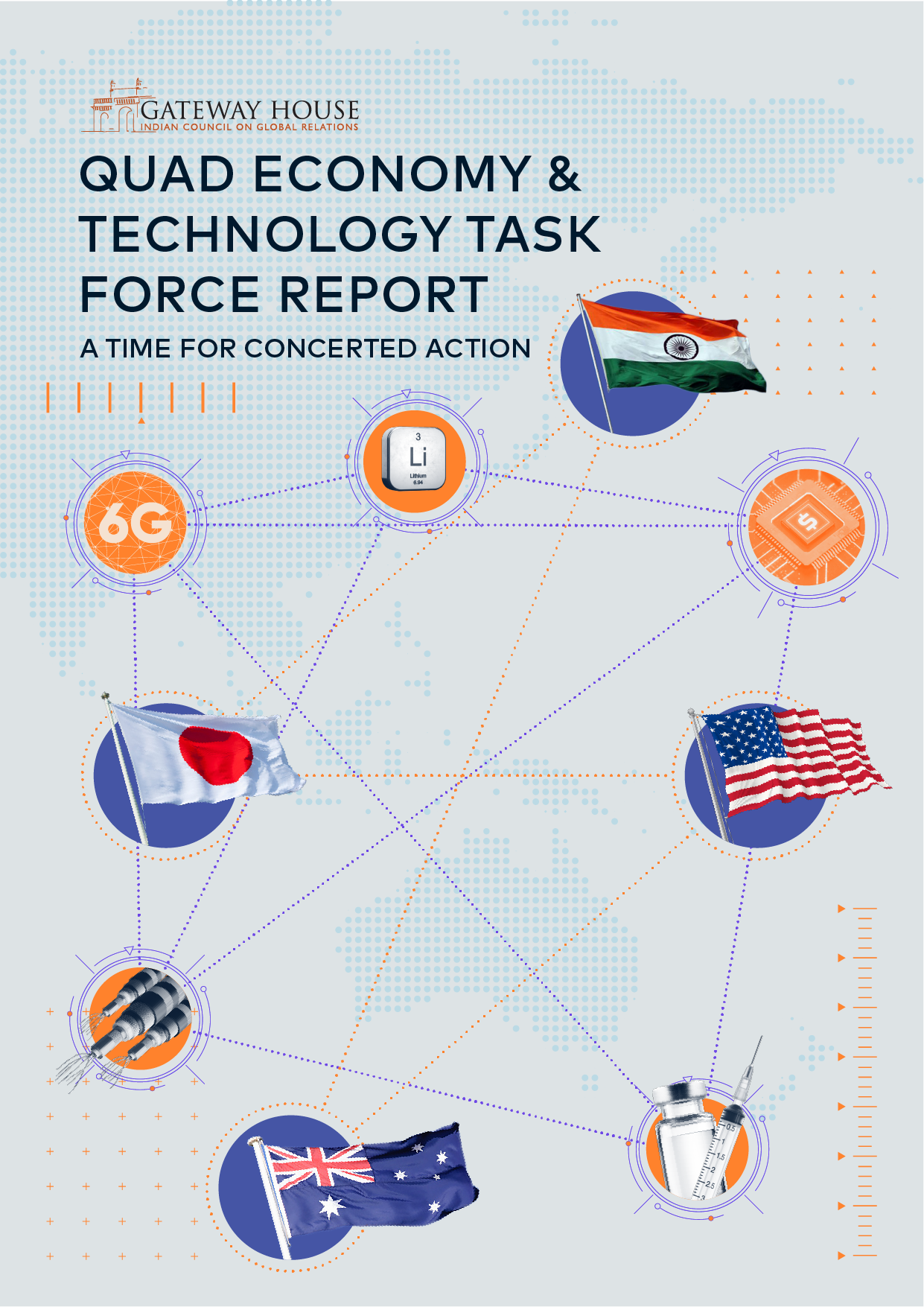
Quad Economy and Technology Task force report Courtesy: Gateway House
23 August 2021

Quad Economy and Technology Task Force Report

Conceived in 2020, the task force studied promising areas for cooperation between the Quad countries beyond their pre-existing maritime security partnership. The report highlights the need to increase economic and technological interdependence among the Quad countries and to establish common and updated rules and standards for emerging technologies in five study areas. The unique mix of the group – three developed and one developing nation, three Pacific and one Indian Ocean nation, three producer-trading nations with one massive emerging market – lends itself to innovation, experimentation and cooperation that can be a template for a new, post-pandemic geopolitical era.

BigTech Report (1) Courtesy: Gateway House
1 July 2021

Regulating Big Tech: A Balancing Act

Big Tech is powerful and its profits are growing - by 105% over the last year. It dominates economies. This raises concerns about data protection and privacy, anti-trust, fintech and the specific role of intermediaries. India is leading the way on fintech, but is behind several countries and institutions on digital rules. It is important to establish laws and rules to govern technology – whether domestic or through multilateral bodies – with the aim to strike the right balance between innovation and regulation.

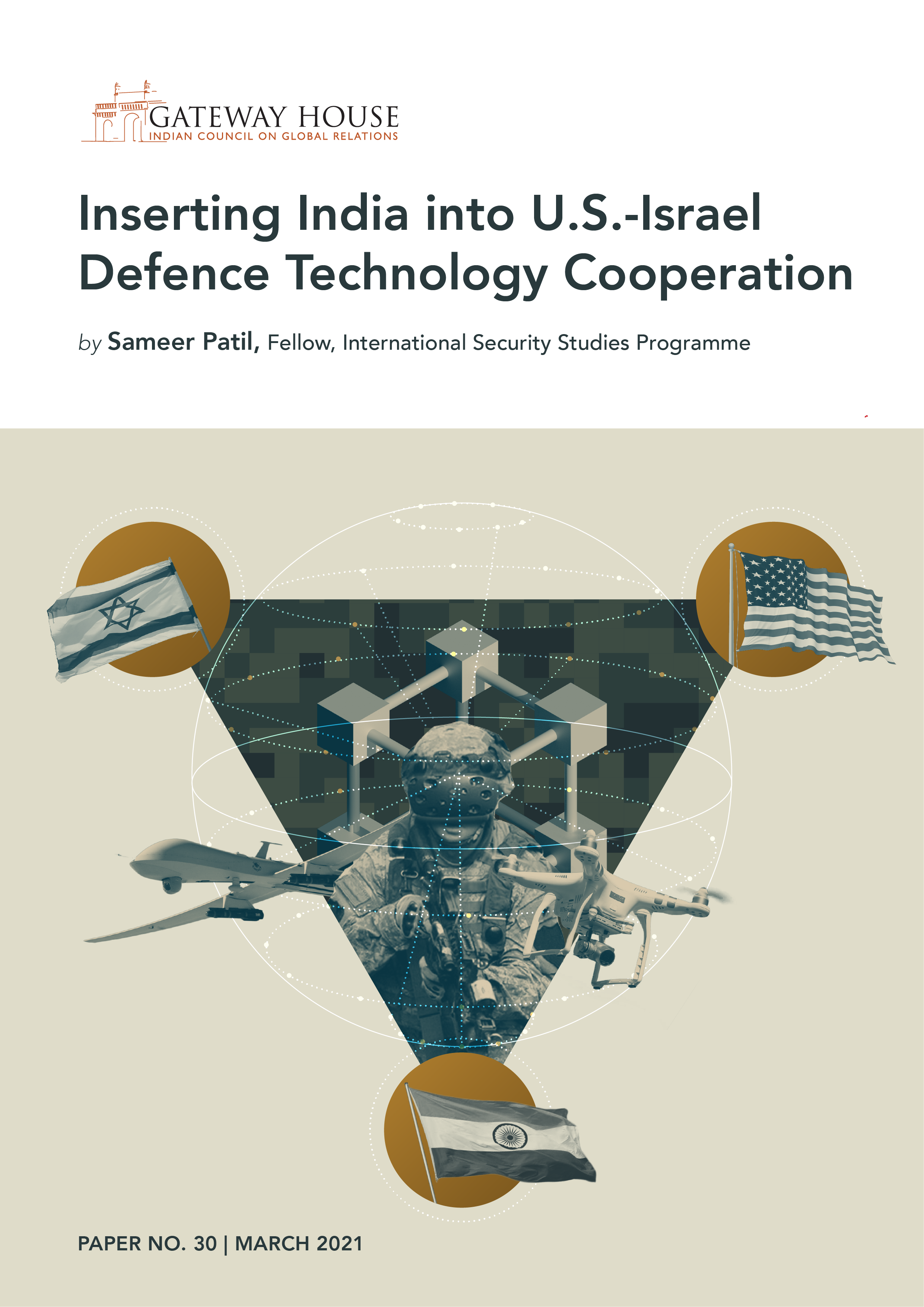
inserting india into u.s.-israel defence technology cooperation Courtesy: Gateway House
15 April 2021

Inserting India into U.S.-Israel Defence Technology Cooperation

Israel and the U.S. have become India's top arms suppliers, with companies from these countries participating in the 'Make in India' initiative. These robust defence partnerships can be elevated, by inserting India into the U.S.-Israel defence technology cooperation corridor. What are the geopolitical and domestic limitations that India must tackle in this effort? What benefit will the U.S. and Israel gain from a partnership with India? This paper studies the U.S.-Israel defence technology corridor, and suggests potential collaborations for India. It recommends the three innovation hubs, Silicon Valley, Tel Aviv and Bengaluru, coming together to maximise their respective strengths and declared national technology priorities.

digital manufacturing in india Courtesy: Gateway House
11 March 2021

Digital Manufacturing in India

Digital manufacturing is the next wave of business globalisation, which, post-pandemic is not just blind automation to save costs but the smart use of digital tools to modernise industry and create good quality jobs. Digital manufacturing is the next leap for India’s tech leadership - the first being the software outsourcing movement in the 1990s. This time around, government incentives are aligning with industry interests. It offers India a chance to reposition itself globally, and play a leadership role.

amit paper cover Courtesy: Gateway House
21 December 2020

India’s energy investments: A fresh approach

India’s investments in energy thus far have concentrated on buying stakes in oilfields in developing countries often at the risk of political unpredictability. With oil prices, and therefore oil company values, falling – India should revise this strategy and aim for better value and lower risk by making investments in companies in the developed world. This paper recommends investing in oil and gas assets in energy-rich developed countries like the U.S., Canada and Australia, to reduce India's vulnerability to future increases in energy prices. These should be made via a sovereign wealth fund (SWF), not the national oil companies. The SWF will be best served by acting as a financial investor, acquiring, only minority stakes, rather than aiming for management control.